Sacred Heritage Collaboratory
The Sacred Heritage Collaboratory (CoLab) is a public charitable trust intended to promote, document, curate, and interpret sacred cultural heritage, and to carry out other charitable, educational, research, and curatorial activities at the intersection of sacred heritage and museum practice across India.
FOUNDING TRUSTEES

Dr Sharada Srinivasan
Padma Shri awardee in Archaeology; Professor and Head of the Heritage Science and Society program at the National Institute of Advanced Studies, IISc.
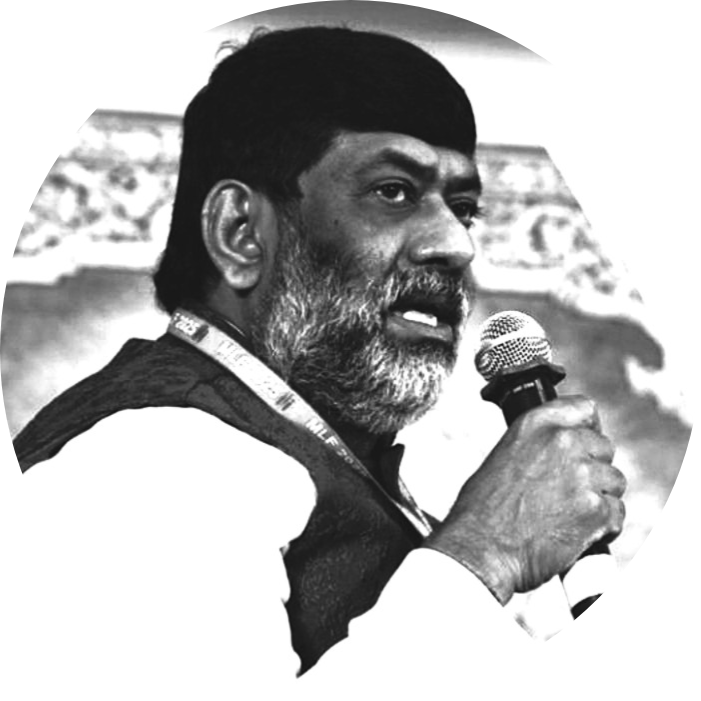
R Gyaneshwar (RG) Singh
Curator, Cultural Advocate; Honorary Secretary, Ramsons Kala Pratishtana; Founder, Ramsingh Museum of Mysore Paintings.

Maniyarasan Rajendran
Co-founder, Way Cultural Conserve; Asst Prof and Design Cell lead at CARE School of Architecture, Trichy.

Anirudh Kanisetti
Historian, Author; Yuva Puraskar, Sahitya Akademi; Thinking Medieval columnist, ThePrint.
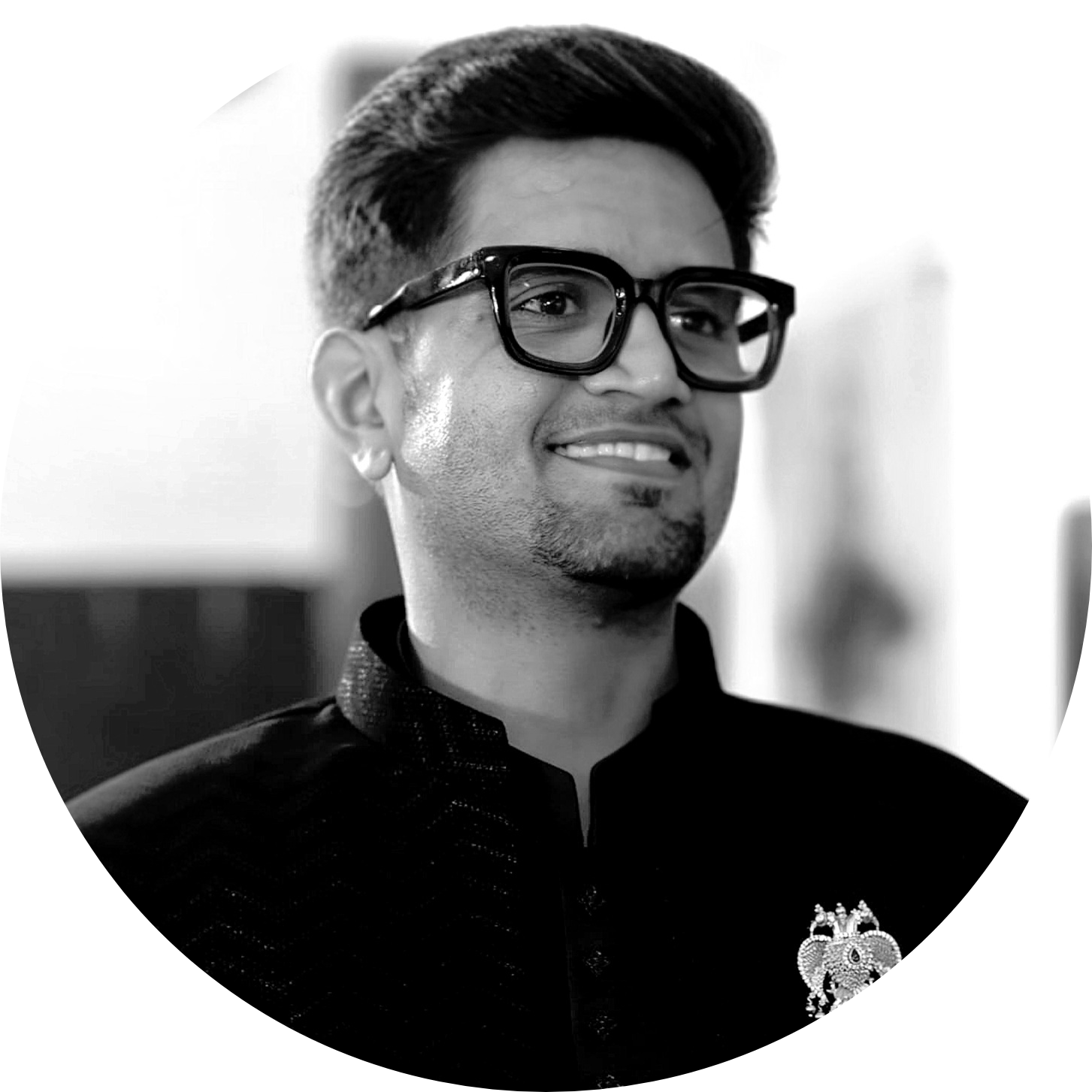
Shashank Satish
Experimental Media Artist; Curator; Founder, Holy Cow! Studio Bangalore; Principal Investigator, Experiential Cognition Lab.
_________________________________________
The Founders recognise that no existing heritage institution in India combines the specific focus on sacred heritage, the deployment of Digital Cultural Heritage methodologies, community co-custodianship of heritage data, and immersive curatorial practice as an integrated institutional programme, and that the CoLab is established to occupy and develop this distinctive institutional space.
_________________________________________
TRUST OBJECTIVES:
(a) To promote, support, and carry out the ethical documentation, curation, interpretation, and conservation of sacred cultural heritage sites in India, with founding focus on the Sacred Ensembles of the Hoysalas — the Sri Chennakeshava Temple at Beluru, the Hoysaleshwara Temple at Halebidu, and the Keshava Temple at Somanathapura — all inscribed as UNESCO World Heritage Sites in 2023, and thereafter to extend this work to other sacred heritage contexts in Karnataka and across India.
(b) To research, develop, and deploy Digital Cultural Heritage (DCH) tools and methodologies — including photogrammetry, LiDAR scanning, Augmented Reality (AR), Mixed Reality (MR), Extended Reality (XR), reflectance transformation imaging, haptic interfaces, and other emerging technologies — for the documentation and public interpretation of sacred heritage sites and their sculptural, architectural, and intangible heritage.
(c) To design, develop, produce, and tour immersive exhibitions and new media installations that interpret sacred heritage for diverse public audiences in India, using embodied, multisensory, and community-co-created curatorial approaches, without replicating active worship of a religious nature. The Trust will not replicate puja or any consecrated ritual and will obtain prior informed consent from temple trusts or similar before any documentation.
(d) To establish and maintain open-access digital repositories of heritage data including three-dimensional models, photogrammetric datasets, iconographic annotations, and interpretive content generated under the Trust's documentation programmes, and to hold such data under a Data Governance Charter that recognises the rights of source communities as co-custodians of their own cultural heritage.
(e) To undertake the digital visualisation and contextualisation of displaced sacred objects and sculptures currently held in Indian and international museum collections, in order to recontextualise such objects within the architectural and ritual spaces from which they were removed, as a supplement to and in support of physical repatriation advocacy.
(f) To collaborate with the Archaeological Survey of India (ASI), the Karnataka Directorate of Archaeology and Museums, and other national and state heritage agencies in the development of new media interpretation at UNESCO World Heritage Sites, ASI-protected monuments, and other protected sacred heritage sites across India, including at onsite interpretation centres and visitor facilities.
(g) To conduct, support, and publish academic and applied research in the fields of digital cultural heritage, computational museology, curatorial theory and practice, sacred heritage ethics, Indic visual culture, and related disciplines.
(h) To provide education, training, and capacity-building programmes including workshops, fellowships, and digital literacy initiatives for heritage professionals, community members, students, and artisans engaged with sacred heritage sites.
ANCILLARY OBJECTS OF THE TRUST:
(a) To develop, publish, and disseminate policy frameworks, white papers, model community consultation protocols, and open datasets for the ethical curation and interpretation of sacred living heritage, for adoption by GLAM (Galleries, Libraries, Archives, and Museums — the international network of heritage memory institutions) institutions, government bodies, and heritage organisations in India.
(b) To enter into Memoranda of Understanding, collaboration agreements, and data-sharing arrangements with temples, religious institutions, GLAM institutions, government heritage agencies, universities, research institutions, and civil society organisations in India and abroad, for the furtherance of the Trust's Objects.
(c) To enter into and maintain formal curatorial, co-production, and exhibition partnerships with GLAM institutions, heritage bodies, cultural agencies, universities, and intergovernmental organisations— including but not limited to museums, art galleries, archives, UNESCO, the International Council of Museums (ICOM), and equivalent bodies — for the purpose of:
(i) the co-curation, co-production, touring, and presentation of immersive exhibitions, new media installations, and digital heritage experiences interpreting the sacred cultural heritage of India for international audiences;
(ii) the international touring and hosting of exhibitions and installations developed by the Trust at GLAM institutions, academic institutions, and heritage venues outside India, including in Canada, the United Kingdom, and other countries where Indian diaspora communities or scholarly interest in Indic heritage are present;
(iii) the co-development and international publication of digital heritage datasets, open-access repositories, and interpretive content in collaboration with international heritage institutions and digital humanities research centres;
(iv) the submission of joint international grant applications and the receipt of co-funding from international heritage foundations, government cultural agencies, and bilateral funding bodies, in compliance with the Foreign Contribution (Regulation) Act, 2010 and applicable exchange control regulations;
(v) organization of and participation in international heritage policy fora, conferences, and consultative processes relating to digital cultural heritage, sacred heritage ethics, repatriation, and community-led curatorial practice;
(vi) the establishment of international scholar, artist, and practitioner exchange programmes, residencies, and collaborative research initiatives in the fields of digital cultural heritage, computational museology, and sacred heritage interpretation; and
(vii) the negotiation and execution of international data-sharing, co-licensing, and intellectual property agreements with GLAM institutions and digital heritage platforms, subject always to the Trust's Data Governance Charter and the consent protocols established with source communities;
provided always that all such international partnerships and activities are carried out in furtherance of the Trust's Objects as set out herein, are consistent with the Trust's ethical commitments regarding community co-creation and the non-replication of active worship, and do not result in the commercial exploitation of heritage data or sacred cultural material without the explicit written consent of the source communities concerned.
(d) To accept grants, donations, bequests, CSR contributions, and other funds from Indian and international sources for the furtherance of the Trust's Objects, in compliance with applicable law including the Foreign Contribution (Regulation) Act, 2010 and the Income Tax Act, 2025.
(e) To acquire, hold, manage, and dispose of movable property necessary for the furtherance of the Trust's Objects, including but not limited to photogrammetric and LiDAR equipment, computing hardware, AR/MR/XR devices, haptic technology, and exhibition materials.
(f) To apply for and receive financial assistance, grants, and scheme funding from the Government of India, state governments, and their respective ministries, departments, and agencies, including the Ministry of Culture, Ministry of Tourism, the Archaeological Survey of India, and equivalent state bodies, for the furtherance of the Trust's Objects.
(g) To undertake, as a charitable and non-profit activity, commissioned curatorial research, heritage interpretation, exhibition design, and new media installation projects for GLAM institutions, government heritage agencies, educational bodies, and heritage organisations in India, and to receive fees for such services in furtherance of the Trust's Objects.
(h) To provide heritage interpretation consultancy, community consultation facilitation, and digital heritage strategy services to government bodies, GLAM institutions, and heritage organisations, as a non-profit activity in furtherance of the Trust's Objects.
(i) To develop, maintain, license, and distribute digital applications, including Augmented Reality, Mixed Reality, and haptic interfaces, for heritage interpretation and public engagement, to GLAM institutions, government agencies, educational bodies, and heritage organisations in India, in furtherance of the Trust's Objects.
(j) To do all such other lawful acts, matters, and things as are incidental or conducive to the attainment of the foregoing Objects:
The spread or promotion of heritage education or learning in all its branches in such manner as the Trustees may think fit, including:
(i) To establish, fund, and administer research fellowships, artist residencies, and professional development programmes in the fields of sacred heritage documentation, digital cultural heritage, and community-led curatorial practice, for scholars, artists, museum and heritage practitioners in India.
(ii) To support studentships and scholarships for poor, needy, and deserving students and scholars of schools, colleges, universities, and other educational or technical institutions.
(iii) Paying the needy students' school fees, college fees, books, instruments, tools, etc.
(iv) Awarding scholarships, giving interest-free loans to needy students on easy terms of payment.
(v) Paying the whole or in part of the educational costs of deserving students.
(vi) Subscriptions, contributions and/or donations to any schools, colleges, public funds, orphanages or other public institutions for the advancement and propagation of heritage education and knowledge, and for the promotion of any public charitable objects.
(vii) To undertake and to do any other work of similar nature aforesaid and carry out any other work to promote the aforesaid objectives.
(viii) Doing any other act that is considered charitable and of general public utility.
The benefits of the objects shall be available to the general public irrespective of caste, creed, religion, sex or disability.
_________________________________________
DATA GOVERNANCE CHARTER
The Trust's Data Governance Charter pertains to governing the collection, custodianship, access, and use of all heritage data generated by the Trust. The charter ensures:
a. That all heritage data generated by the Trust is held in trust for the source communities whose heritage it represents and relevant government bodies such as the Central and State Archaeology departments.
b. That no heritage data may be used for commercial, promotional, or third-party purposes without explicit written community consent and Board approval.
c. That the Trust's data governance is aligned with UNESCO's digital access and inclusion policies for World Heritage Sites.
d. That on dissolution of the Trust, all heritage data is transferred to an appropriate open-access heritage institution and not to any private or commercial entity.
e. That all personal data collected in the course of the Trust's programmes shall be processed in compliance with the Digital Personal Data Protection Act, 2023 and applicable rules, with explicit consent of data principals obtained before collection and retained in the Trust's records.
ALIGNMENT WITH UNESCO FRAMEWORKS AND INTERNATIONAL HERITAGE STANDARDS:
The Trust recognises that its Objects — the ethical documentation, curation, interpretation, and digital mediation of sacred cultural heritage — exist within a body of international normative instruments that define global standards for heritage preservation, community rights, digital access, and the ethical use of emerging technology. The Trust affirms its commitment to conducting all its activities in alignment with the following UNESCO frameworks, as amended or supplemented from time to time:
(a) UNESCO Convention concerning the Protection of the World Cultural and Natural Heritage (1972) and its Operational Guidelines (as revised). The Trust shall carry out all documentation, interpretation, and digital mediation activities at UNESCO World Heritage Sites in accordance with the principles of Outstanding Universal Value, authenticity, and integrity as established under this Convention and its Operational Guidelines. All activities at inscribed sites shall be coordinated with the relevant State Party authorities, including the Archaeological Survey of India and the UNESCO World Heritage Centre, and shall in no way compromise the Outstanding Universal Value for which the properties were inscribed.
(b) UNESCO Charter on the Preservation of Digital Heritage (2003). The Trust recognises that digital heritage data generated through its documentation programmes constitutes unique resources of human knowledge that may be ephemeral and require purposeful production, maintenance, and management to be retained. The Trust shall ensure that: all heritage datasets are actively maintained and preserved against loss; open access to digital heritage resources is promoted for the benefit of the general public; and digital documentation supplements and does not substitute for the physical conservation of the heritage material it records.
(c) UNESCO Convention for the Safeguarding of the Intangible Cultural Heritage (2003). The Trust recognises that the intangible cultural heritage it engages with — including living ritual practices, liturgical traditions, iconographic and craft knowledge, and the oral traditions of the sacred site communities with which it works — is living heritage borne by specific communities, groups, and individuals. The Trust shall recognise and respect these communities as the primary custodians of their intangible heritage and shall not undertake the documentation, interpretation, or digital representation of any intangible heritage practice without their free, prior, and informed consent, given in accordance with the communities' own customary practices and governance structures.
(d) UNESCO Ethical Principles for Safeguarding Intangible Cultural Heritage (2015). The Trust shall conduct all interactions with the communities, groups, and individuals who create, safeguard, maintain, and transmit the intangible cultural heritage with which it works in accordance with the twelve Ethical Principles for Safeguarding Intangible Cultural Heritage adopted by UNESCO's Intergovernmental Committee in December 2015. In particular, the Trust affirms that:
(i) all interventions, documentation activities, and digital representations of living sacred heritage shall be contingent upon the free, prior, sustained, and informed consent of the communities concerned;
(ii) the Trust shall not distort, decontextualise, or commercially exploit any intangible cultural heritage practice or community knowledge without explicit written consent of the practitioners; and
(iii) the benefits arising from the Trust's work — including digital access, interpretive content, and any income derived from exhibitions or commissions — shall be shared equitably with source communities in a manner agreed with them.
(e) UNESCO Recommendation on the Ethics of Artificial Intelligence (2021). The Trust recognises that its digital heritage methodologies — including photogrammetric processing, object detection and recognition, AI-assisted iconographic annotation, and machine-learning-aided interpretation — constitute the application of artificial intelligence systems to the preservation, enrichment, understanding, and public access of tangible and intangible cultural heritage. The Trust shall apply the Recommendation's principles of transparency, accountability, human oversight, cultural diversity, and non-discrimination to all AI and computational systems deployed in its programmes. All AI-generated interpretive content shall be subject to community review before publication or exhibition.
(f) UNESCO Universal Declaration on Cultural Diversity (2001). The Trust affirms that the cultural rights of the communities whose sacred heritage it documents and interprets are an integral part of human rights, and that the diversity of cultural expression — including living religious and ritual traditions of sacred site communities — must be protected and reflected in all its curatorial, interpretive, and educational programmes.
(g) Alignment with future UNESCO instruments. The Board of Trustees shall review, at each annual meeting, any new or revised UNESCO instruments, ICOM codes of ethics, or equivalent international standards relevant to the Trust's Objects, and shall update the Trust's Data Governance Charter and operational protocols accordingly, to ensure that the Trust's practice remains aligned with the most current international standards throughout its lifetime.
_________________________________________